The ocean keeps us.
We keep it in return.
The world’s oceans cover more than 70 percent of our planet, drive its weather, regulate its temperature and ultimately support all living organisms.
Divers are often the first to see the damage — and the first who can speak for the reef.
Marine scientists, policy makers and conservationists have a responsibility to create public awareness of the plight of the oceans. But it is the community of scuba divers and snorkellers — with first-hand experience and underwater observation — that can share what they have seen.
Without the voice of these ambassadors, it is unlikely the world can mobilise the policy and public action needed to save the oceans. That is why our programme includes conservation and environmental awareness alongside every dive.
Where the work
takes place.
Clean-ups, coral restoration and education. One is immediate, one is slow, one is generational — and all three are necessary.
Plastic Free Oceans
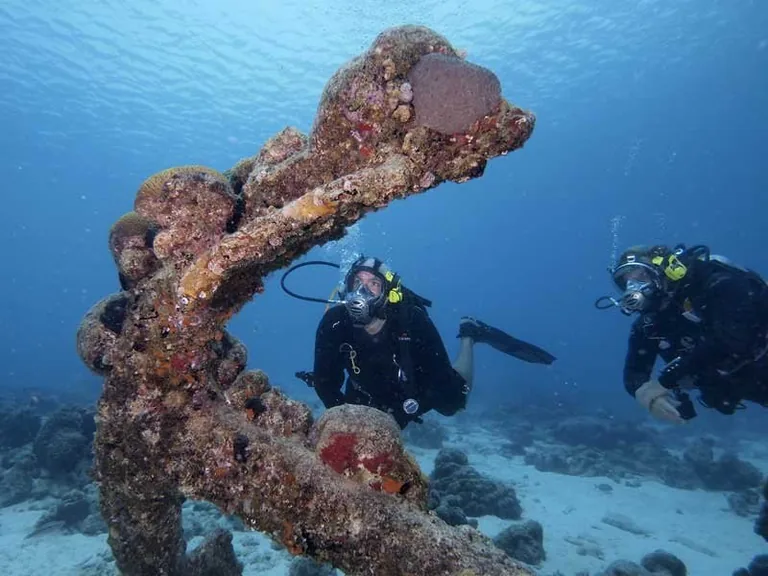
Every 28th of the month, divers and beach volunteers remove debris — and record what they find.
Join a clean-upUnderwater Garden
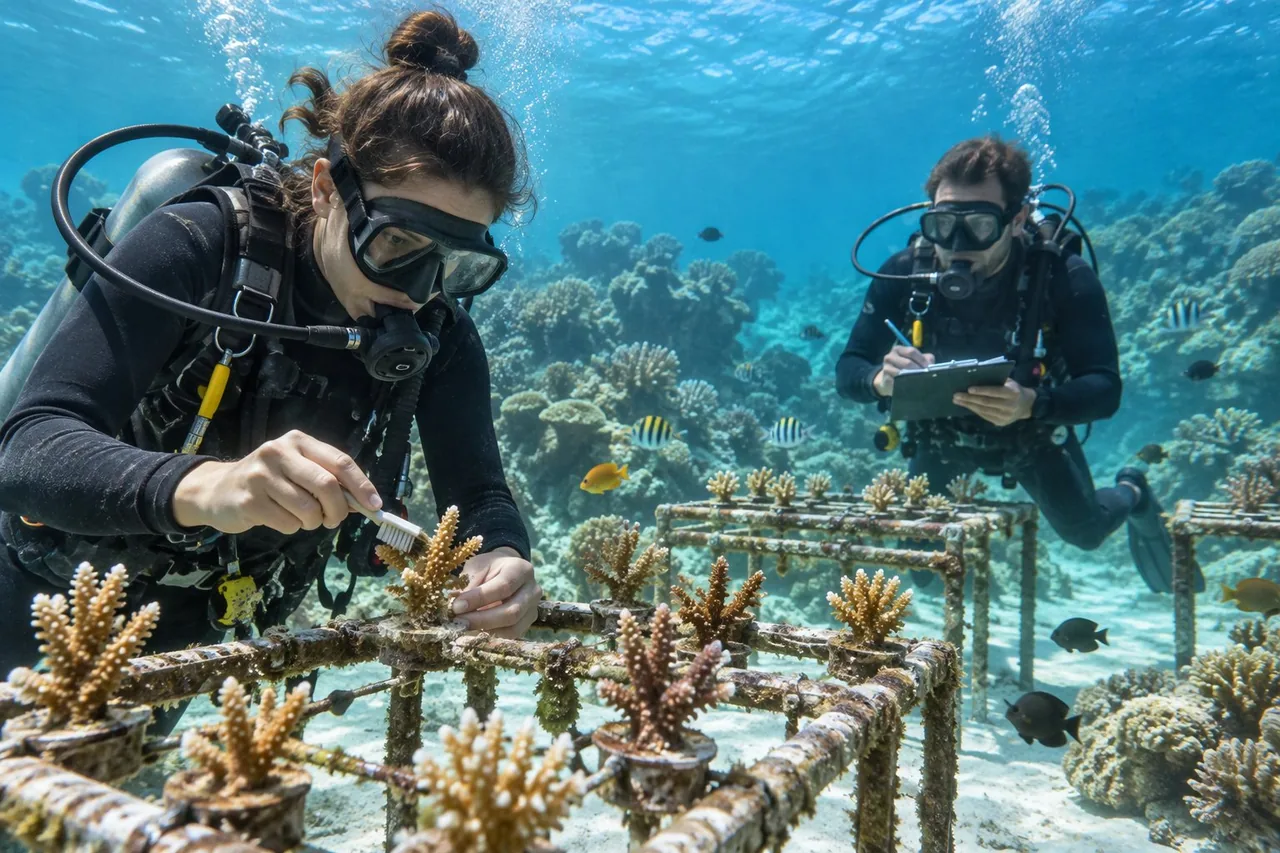
An artificial reef project where guests can plant, name and follow the growth of their own coral.
Plant a coral
Future generations
With International Humanity Foundation, we work with local students on waste, biodiversity and the marine food chain.
Read the journalVast, and not invulnerable.

People protect what they have felt.
A diver who has floated above a living reef, who has learned to move without touching it, is a different kind of visitor. The practice changes the relationship — and the relationship changes what people are willing to do.
That is why human health and ocean health are not two programmes here. They are the same programme, seen from two sides.
Read the ocean facts