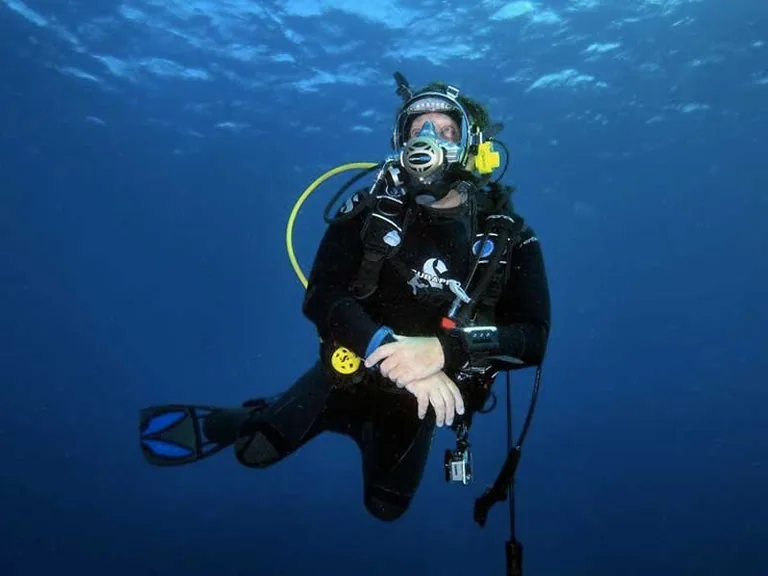
Meditation is performed in a state of inner and outer stillness. Its purpose is to channel awareness in a more positive direction, transforming the state of mind and the quality of concentration.
The person preparing to meditate usually begins by harnessing awareness — focusing the mind on an object, the breath or a sound. Once attention is engaged, concentration turns into meditation.
Two forms
Concentrative meditation focuses attention on the breath, an image or a sound, stilling the mind so that greater awareness and clarity can emerge. Sitting silently and following the breath is its most basic form. Anxiety makes breathing shallow, rigid and uneven; tranquillity makes it slow, deep and even.
Mindfulness meditation widens awareness to the sensations and feelings around us — but at a distance. We experience every aspect of the environment without consciously reacting to it, gaining calm and clarity.
Why the underwater world is different
The water offers an unusually direct route to meditation. The environment, the weightlessness and the sound of your own breathing create a naturally relaxed state. But relaxation alone is not enough: a diver must remain focused, aware of depth, position and resources, and able to make good decisions.
Zen Harmony Meditation teaches the practices required for a skilful, controlled response to any underwater situation — and to any surface situation for snorkellers.
Underwater buoyancy, the colours of marine life and the only sound being your own breathing is, in itself, pure meditation.
With that focus, something else happens: you begin to truly see the reef. Not as scenery, but as a living system you are visiting.
