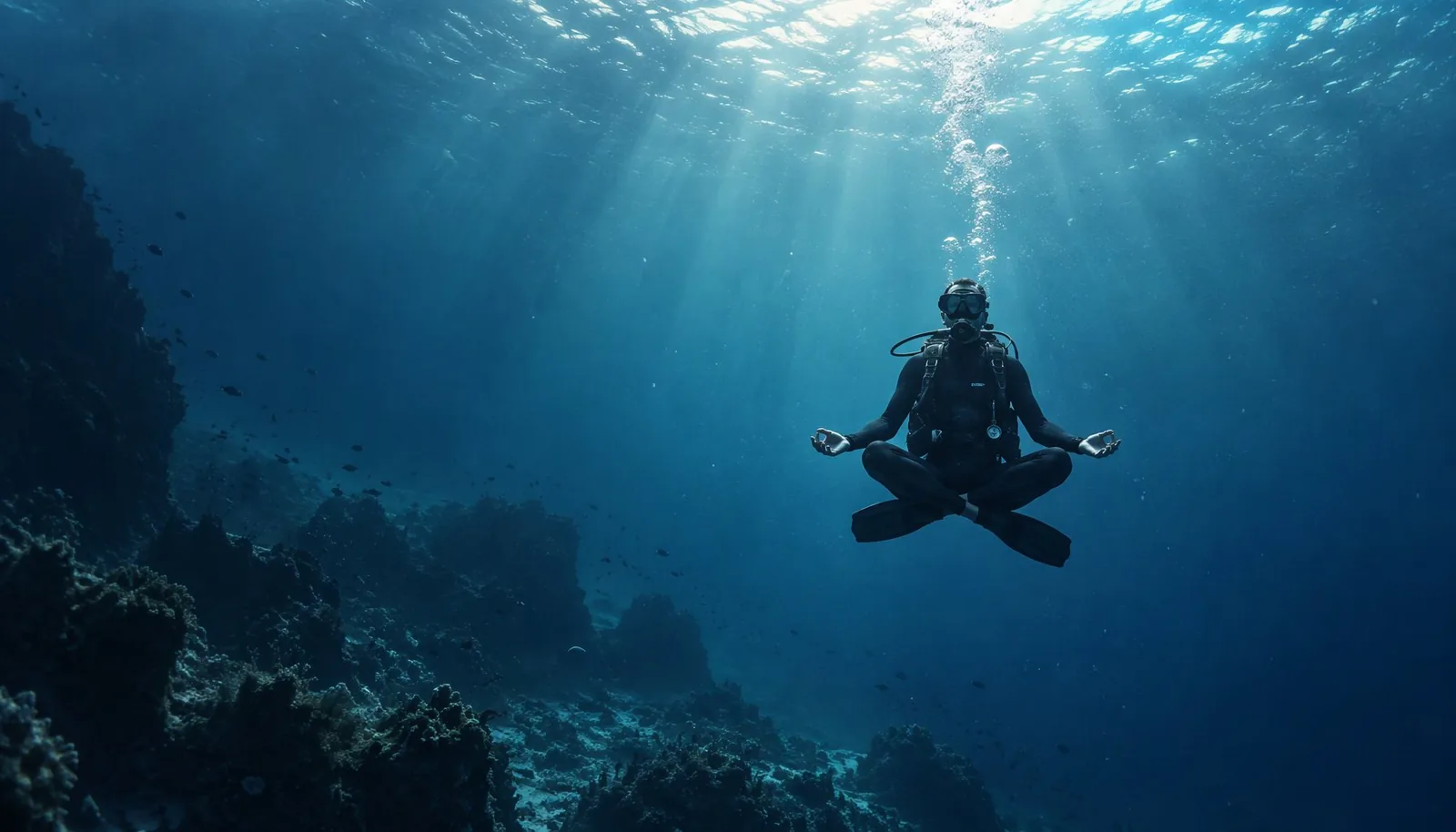
Pranayama is the science and technique of regulated, effective breathing. It is the foundation on which everything else in Zen Harmony Diving rests.
Breathing is the act of taking air — prana — from the atmosphere into the lungs, absorbing oxygen into the blood, and exhaling carbon dioxide and water vapour. It is ironic that we are rarely taught how to do it well, since without it we cannot survive even a few minutes.
Why most of us breathe too little
Our lungs contain some 73 million cells. In normal breathing only about a third of them are oxygenated. At birth we are deep belly-breathers; as we grow, stress and environment change the pattern. Most adults become shallow chest breathers, using hardly the bottom third of the lungs.
Regaining a slow, deep, natural breath has a major impact on physical, mental and spiritual wellbeing. It also happens to make you a better diver.
Zen Harmony Breathing
Based on classical pranayama techniques, we have developed a set of breathing practices specifically for scuba divers and snorkellers — for pre-dive preparation, post-dive recovery and daily practice.
- Increased awareness and practice of correct breathing in water 800 times denser than air.
- Specific guidance on translating that awareness into balanced flotation.
- Reduced air consumption — typically 15% to 20% — during the dive.
- Techniques for removing excess nitrogen after the dive.
- Daily exercises before and after diving to enhance lung capacity and depth of breath.
The greatest challenge for many divers is simply getting their breathing right. It is also the most rewarding thing to learn.
Even within a five to seven day diving holiday, conscious practice leads to measurable improvements in air consumption and buoyancy — and to a noticeably quieter mind.
In the programme
Zen Harmony Breathing is an essential part of the pre-dive and post-dive process. Your instructor will review the techniques with you each day, in the pool and in the ocean, until they become natural.
